
Why Crushing Material On Site Is Often Better Than Using Skips or Muck Away Lorries
When carrying out demolition, extension work, or site clearance, builders often face the same question: what should be done with the concrete, brick, and rubble produced on site?
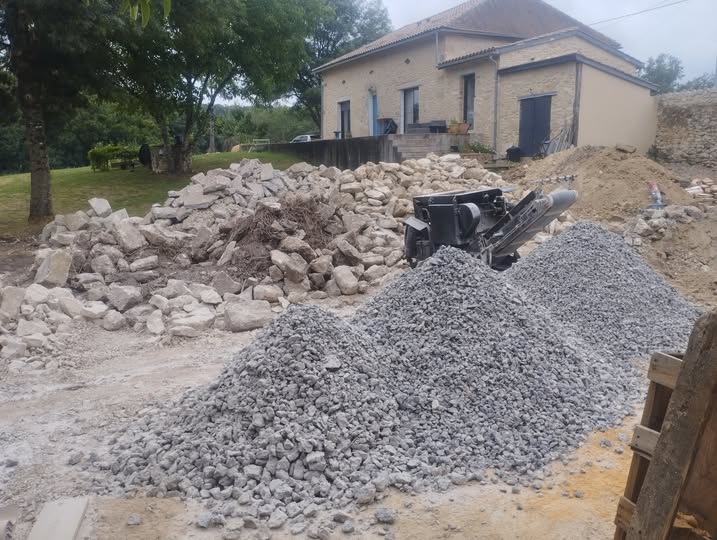
Traditionally, the material is loaded into skips or removed using muck away lorries. However, an increasing number of contractors are choosing to crush the material directly on site and reuse it as a valuable aggregate.
Below is a straightforward explanation of why crushing on site is often the smarter and more cost-effective option.
1. Save Money on Waste Disposal
One of the biggest costs on any building project is waste removal.
Using skips or muck away lorries usually involves several charges:
- Skip hire or haulage cost
- Waste disposal or landfill charges
- Additional labour to load and transport the waste
By crushing material on site, the concrete and brick are recycled into usable aggregate, which eliminates many of these disposal costs.
In many cases, builders discover that the material they once paid to remove can actually become a free building material for the same project.
2. Create Your Own Reusable Aggregate
Crushing concrete, brick, and rubble produces a graded material that can be reused for several purposes, including:
- Sub-base for driveways and patios
- Hardstanding for site compounds
- Backfill around foundations
- Base material for tracks and access roads
Instead of ordering multiple loads of quarried stone, contractors can simply reuse the crushed material already available on site.
This reduces both material costs and delivery delays.
3. Reduce Lorry Movements
Transporting waste away from site often requires multiple skip exchanges or several muck away lorry collections.
Each collection means:
- Additional vehicle movements
- Potential site disruption
- Increased fuel costs
Crushing material on site significantly reduces the number of vehicles required, which helps keep the project more organised and efficient.
4. Improve Site Efficiency
Waiting for skips to be delivered or exchanged can slow progress on a project.
Crushing the material directly on site allows builders to:
- Clear demolition waste quickly
- Keep the working area tidy
- Maintain better workflow on site
Material can be processed and reused as the job progresses, rather than building up large piles of waste.
5. Environmentally Responsible Construction
The construction industry is increasingly focused on reducing waste and improving sustainability.
Crushing and reusing material on site offers several environmental benefits:
- Less material sent to landfill
- Reduced quarrying of natural stone
- Lower fuel consumption from transport vehicles
Recycling construction waste is therefore not only economical but also better for the environment.
6. Suitable for Many Types of Building Projects
On-site crushing is commonly used on projects such as:
- House extensions
- Property renovations
- Demolition works
- Site clearances
- Groundworks and landscaping
Modern compact crushers are designed to work on smaller construction sites, making the process practical even where space is limited.
Final Thoughts
For many builders, what was once considered waste can now be turned into a useful and cost-saving resource.
By crushing concrete and brick directly on site instead of relying on skips or muck away lorries, contractors can:
- Reduce waste disposal costs
- Produce their own aggregate
- Minimise site disruption
- Improve environmental performance
As construction costs continue to rise, more builders are recognising that recycling material on site is not only practical, but financially beneficial.